

ivygo
User experience research commissioned by ivygo, an electric vehicle (EV) charger booking platform, into the motivations, triggers, barriers and perceived risks for small business owners considering installing an EV charger for customer use.
Project overview
About ivygo
ivygo is an online electric vehicle (EV) charger sharing platform with the aim of connecting EV drivers seeking nearby chargers with home and business owners seeking to earn a passive income from their charger.
Project description
Industry-led UX/UI project completed through Harness Projects, as part of the UX Career Launcher program, for ivygo.
The client is striving to grow the network of hosts on the platform but lacks insight into the motivations and barriers of small business owners considering installing an EV charger at their business.
I was tasked with applying UX research methodology to identify what small business owners are thinking and feeling about EV charger installation so that ivygo can refine their outreach and onboarding strategies while building trust and support, and scaling up faster.
Project outcomes and results
I conducted mixed-method research to uncover key barriers and motivations for EV charger adoption among small businesses. Synthesised findings through affinity mapping and data visualisations identified themes, revealing a critical information gap around perceived financial risk and demand for chargers.
I translated insights into personas, data visualisations, and actionable recommendations that equipped stakeholders with a clearer understanding of user needs so they can make informed, strategic decisions around product positioning, messaging and experience design.
The client’s response: “I love it! I really, really love it! I can’t wait to explore the decision path, that will be so helpful. I’m very excited!”
MY ROLE
UX Researcher
DONE WITH
Harness Projects in partnership with ivygo

The process
For this project I followed a four-phase research process.
In the planning stage I interviewed the stakeholder and developed a research strategy.
In the recruit and develop stage, I designed an interview script and survey and approached potential participants.
In the data collection stage, I conducted semi-structured interviews and collected surveys.
In the data synthesis stage, I explored themes and connections, created user personas, and outlined findings and recommendations.
From research planning to insight generation.
Plan, recruit and develop
After aligning on stakeholder goals, I used a mixed-methods approach to capture both breadth and depth of insight. Surveys enabled efficient collection of broad insights across a wider sample, helping to identify key trends and common barriers. Semi-structured interviews complemented this by providing the flexibility to probe deeper, revealing the nuanced motivations and concerns influencing decision-making.
Interview script
Curated sample of interview questions:
How much do you agree or disagree with this statement: ‘Offering EV charging will be an essential service for regional businesses in the next 3 years’?
Before today, how much did you think it costs (total) to buy and install a commercial EV charger?
What factors would influence your decision to get an EV charger?
What concerns would most likely prevent you from installing an EV charger?
How familiar are you with government incentives or rebates for EV charger installation?
Would grants, rebates, or subsidies influence your decision?
If EV chargers were free to install, would you want one? Why or why not?
Survey design
Survey questions were a combination of multiple choice and Likert scale questions including:
How important is sustainability to your business?
1= Very Important 5= Not at all important
How much do you agree or disagree with this statement: ‘Offering EV charging will be an essential service for regional businesses in the next 3 years’
1= Strongly agree 5= Strongly disagree
What factors would influence your decision to get an EV charger for your business? (Select all that apply)
- Generating additional revenue from charging fee
- Meeting customer demand or expectations
- Improving sustainability or brand image
- Attracting new customers
- Encouraging customers to stay longer
- Staying competitive with nearby businesses
- Nothing
Data collection
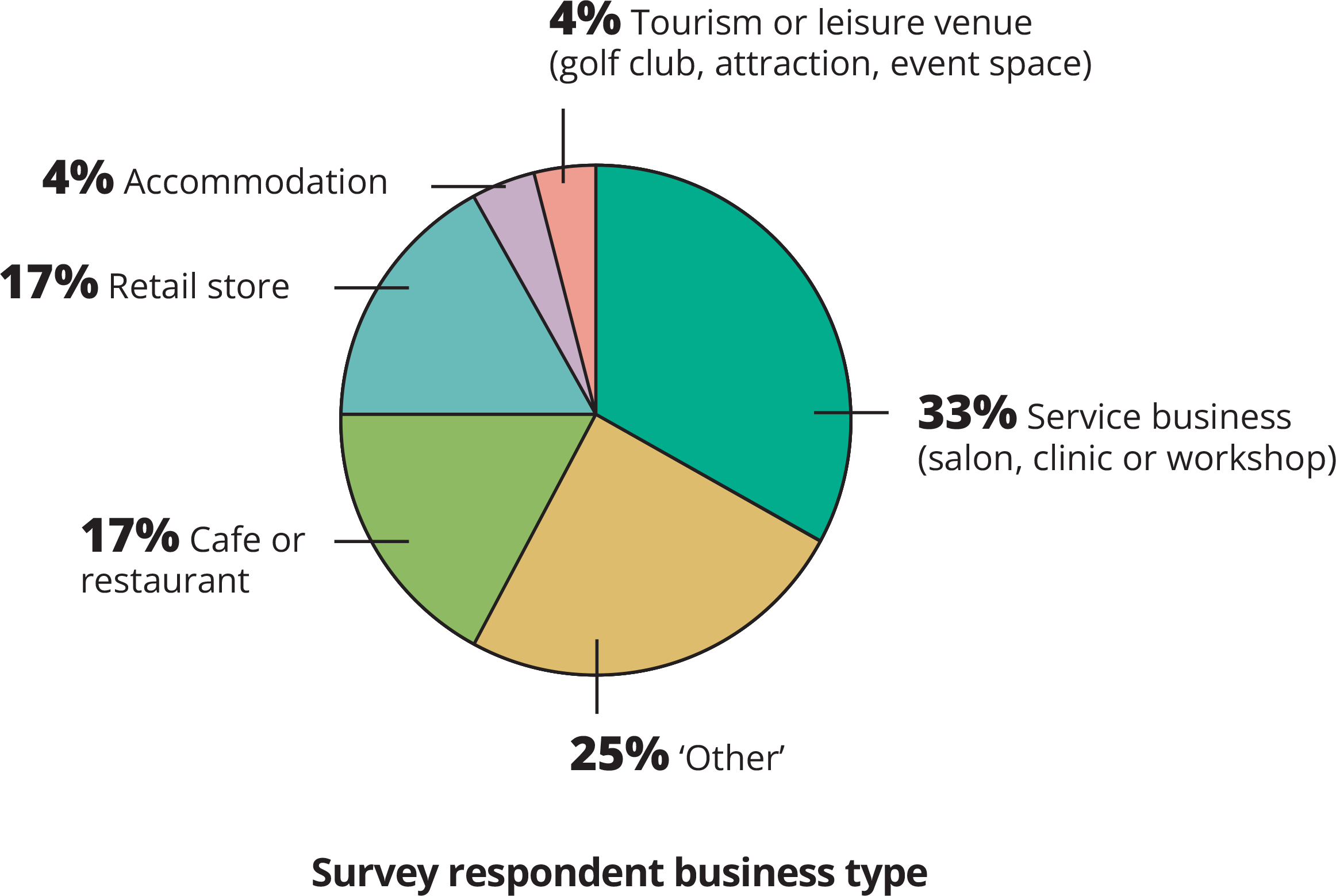
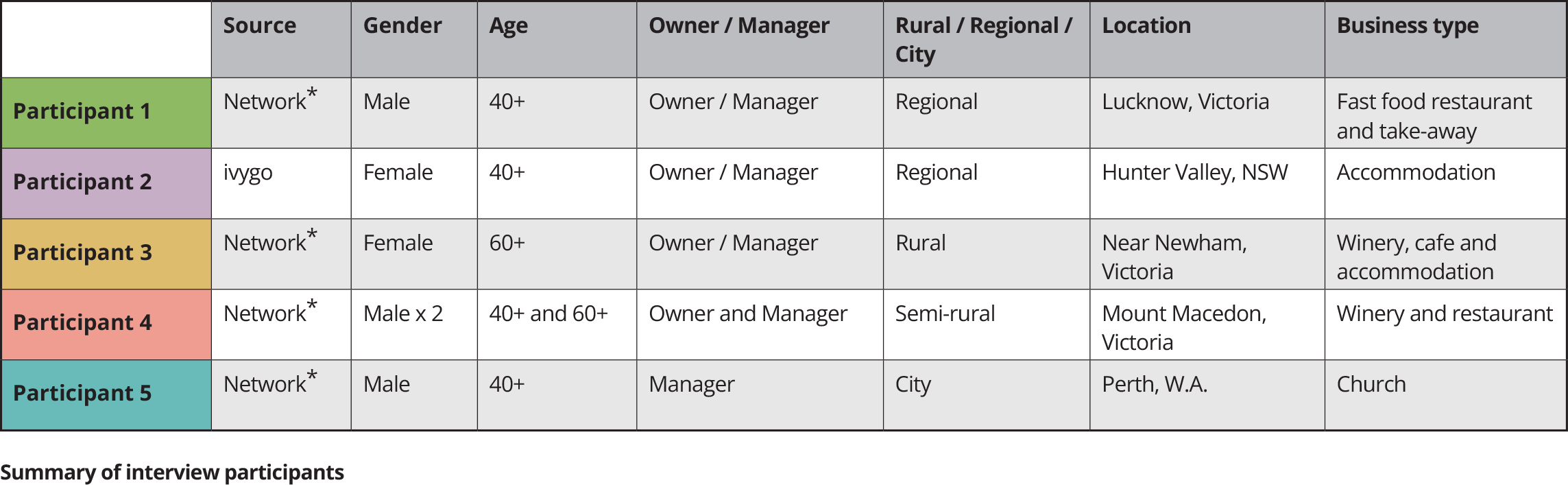
Data was collected via 5 remote and in-person semi-structured 30 minute interviews, and 24 surveys using Lyssna, an online market research platform.
Participants were screened to target people who:
are the owner or decision maker of a small or medium business in Australia
host customers for an hour or more
do not already have an EV charger installed, and
have onsite customer parking available for multiple cars.
Data synthesis methods
Affinity mapping was used to cluster qualitative interview data into structured themes and patterns.
Indicative, non-exhaustive examples below.
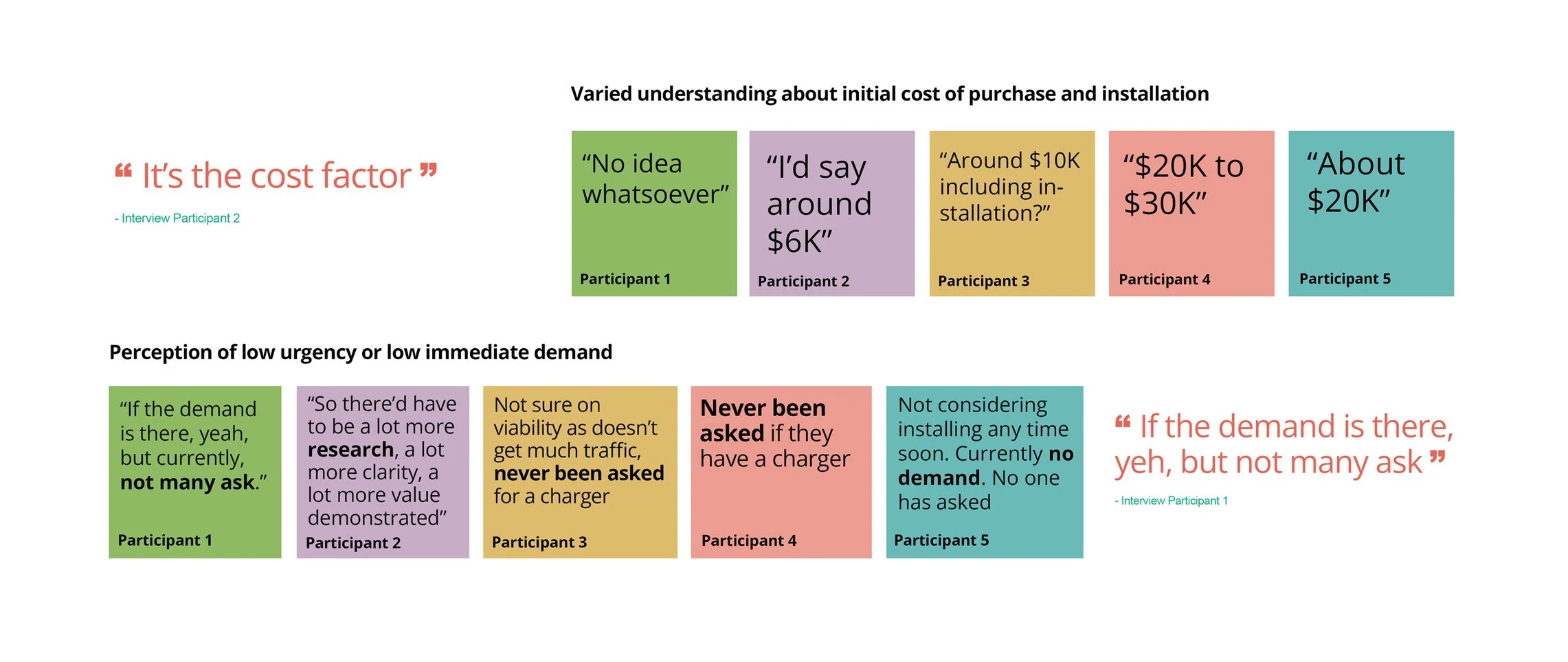
4 out of 5 of the interview participants cite cost as biggest concern
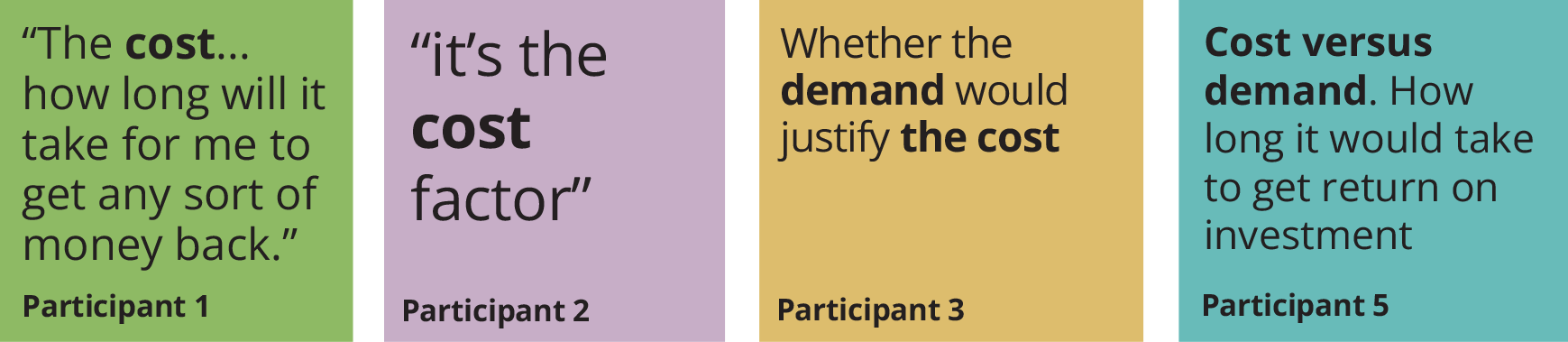
4 out of 5 stated they would need to see a return on investment

All perceive urgency/demand for installing an EV charger to be low

Varied understanding about initial cost of purchase and installation

4 out of 5 confirmed that government grants and subsidies could be a trigger

4 out of 5 said environmental sustainability is important to their business

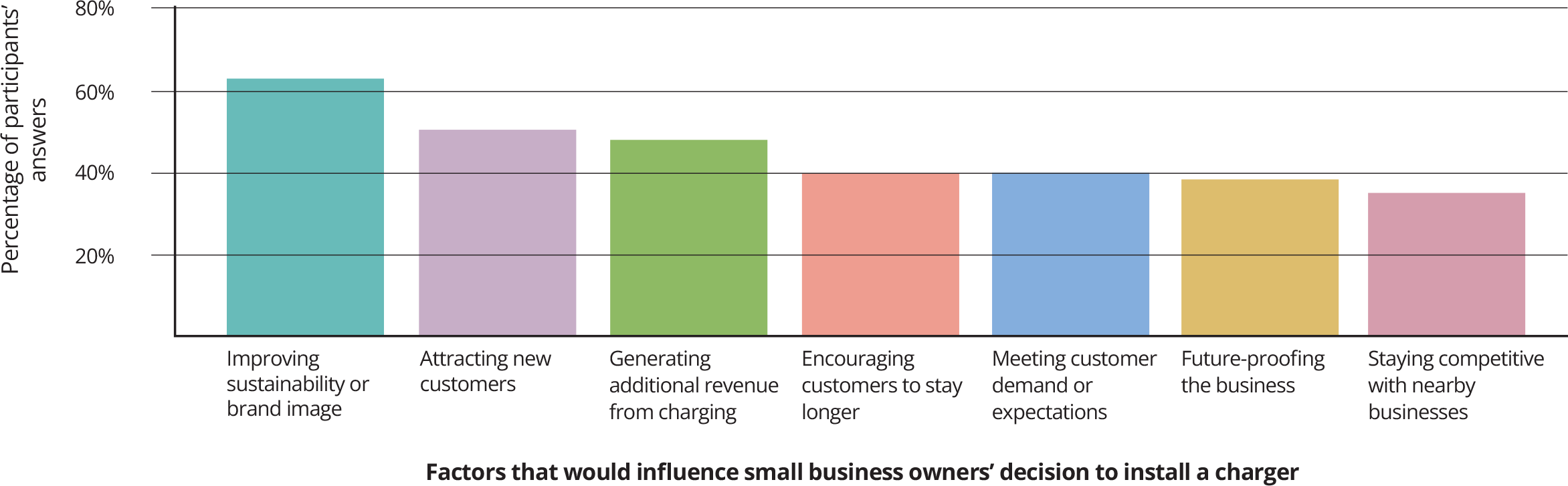
Data visualisation to highlight the motivations for installing an EV charger among the 5 interview participants and the 24 survey respondents.
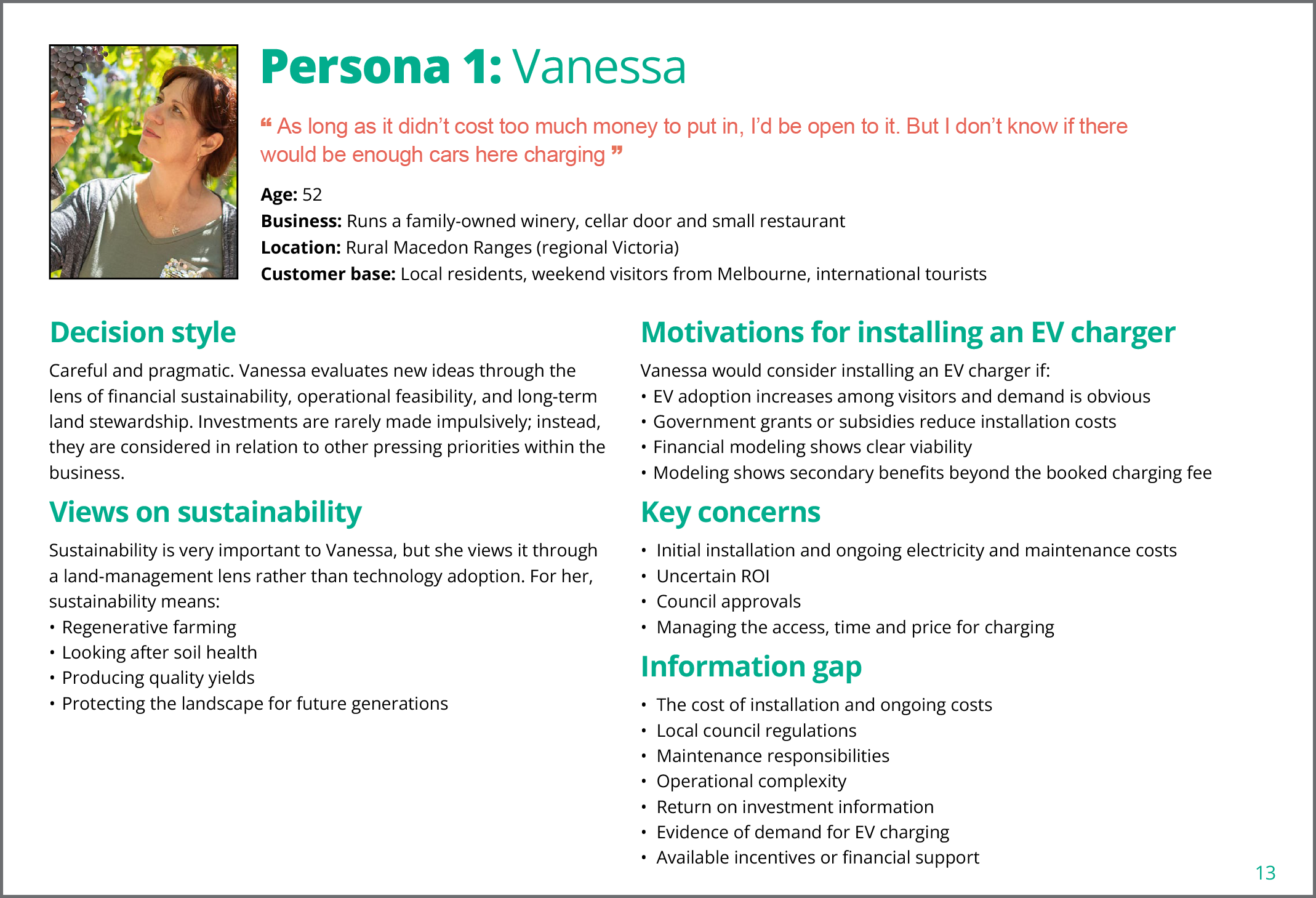
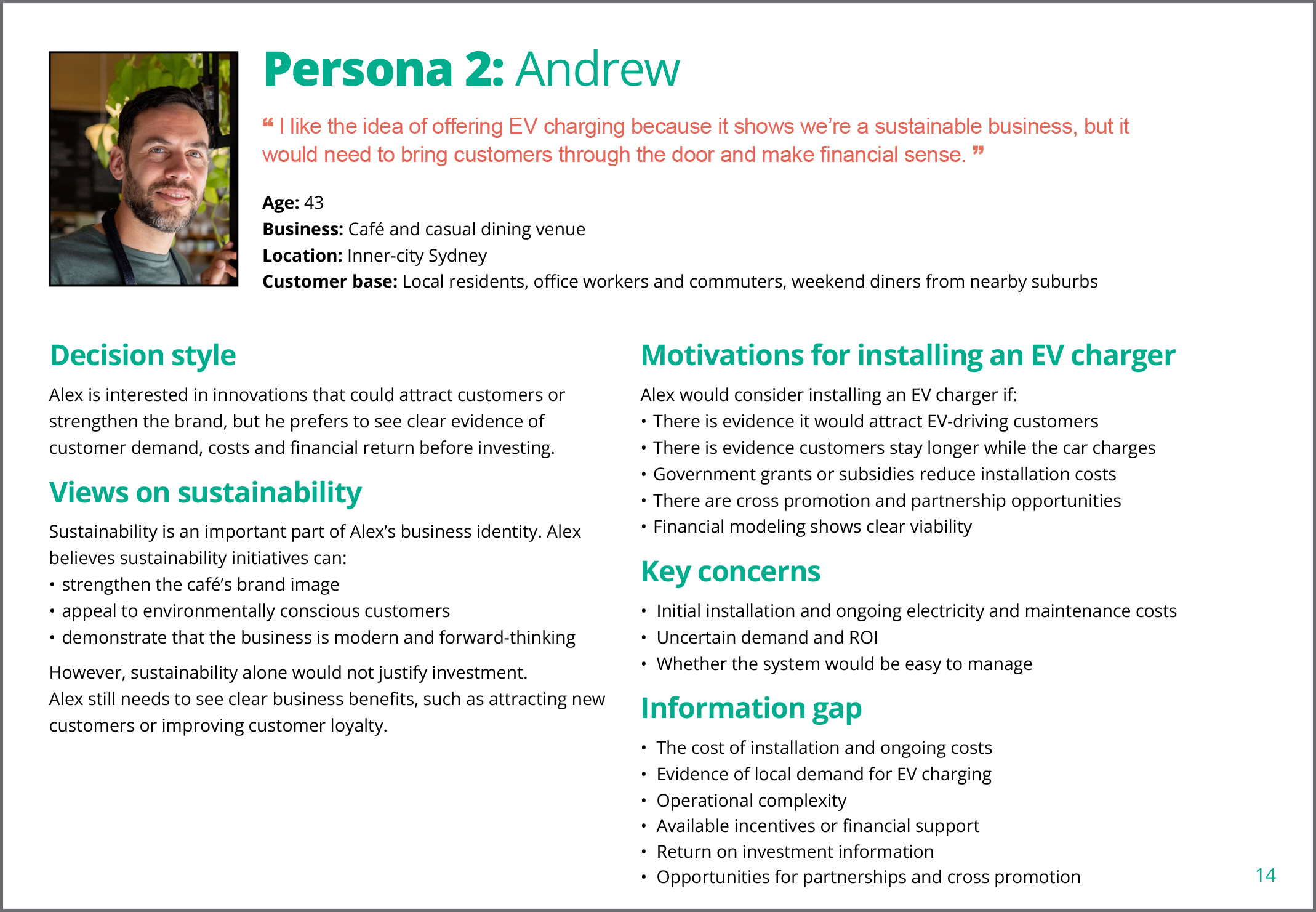
User personas developed to transform the data into relatable characters in order to foster empathy, clarify the needs of the two main user groups (city and regional), help guide product and feature prioritisation, improve messaging and reduce risky assumptions.
Summary of research findings
These preliminary research results suggested that businesses are not rejecting EV charging, they are waiting for clearer proof of value.
A common theme throughout the research is the information gap that exists when it comes to initial and ongoing costs, evidence-based customer demand projections, ROI projections, available incentives and financial support, what is involved with an EV charging platform and the potential benefits for small businesses of known-brands partnering with ivygo.
Business motivations and perceived benefits of installing an EV charger
Brand and sustainability positioning is important, especially in the city
Commercial reasons are the primary motivators
Government support would be a key trigger
Evidence of customer demand, another key trigger
Perceived barriers and risks
75% cited upfront or ongoing cost as a key concern
Demand uncertainty is a primary barrier, especially in rural or regional areas
The results validated the client’s hypothesis that cost and demand uncertainty are key concerns, but the client was surprised to hear that positioning sustainability ahead of financial incentives could miss the mark when speaking with most potential charger hosts, since commercial reasons are the primary motivators for installation.
Actionable recommendations based on user insights
Recommendation 1.
Hire a Business Development Manager and enlist a recruiter to source a larger set of research participants. Increasing the number and diversity of research participants in future studies would strengthen the validity of insights and ensure findings are representative across a broader user base.
Recommendation 2.
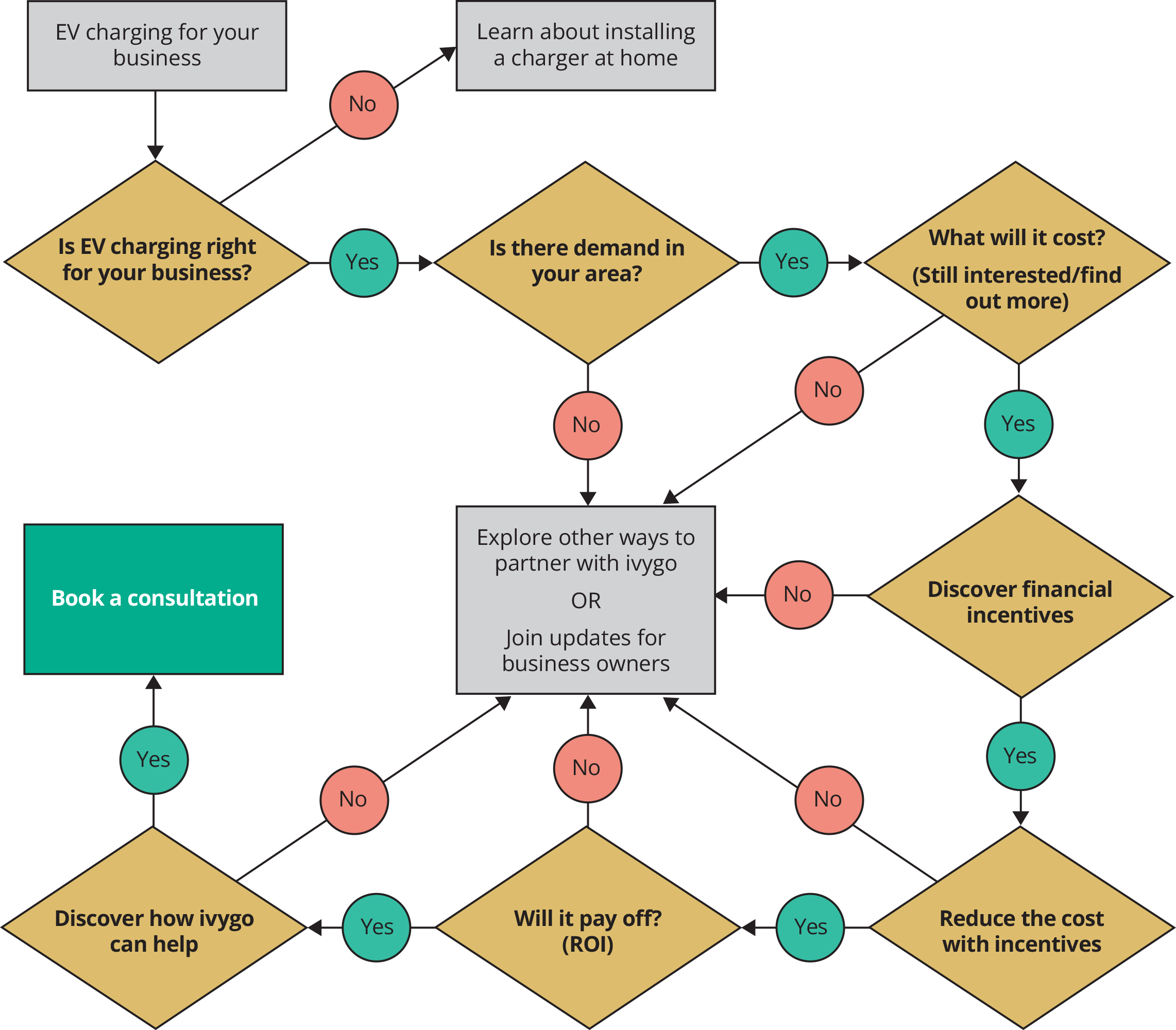
Develop an ‘EV charging for your business’ section within the website with an EV charging decision path for small businesses. This offers relevant, tailored information at each stage, thereby filling the existing knowledge gap around demand and financial incentives, while nudging potential charger hosts towards booking a consultation with an ivygo representative.
Proposed a decision path to streamline the EV charger adoption journey, helping users navigate key decisions with greater clarity and confidence.
Reflection
This project reinforced for me that research only creates value when it actively supports business decision-making. While I initially focused on thorough data collection and analysis, I learned that the real impact comes from synthesising findings into clear, actionable insights that stakeholders can use to prioritise features, refine content strategy, and optimise user journeys.
It also deepened my understanding of how to translate user behaviour and motivations into evidence the business can act on, reducing uncertainty, challenging assumptions, and guiding more confident product decisions. Importantly, I learned to balance qualitative empathy with quantitative validation, ensuring insights not only reflect user needs but also align with business goals and can be measured over time.